A route leading from the agricultural heart of Tuscia to historic Tarquinia, through rolling hills, ancient paths, and the evocative atmosphere of the Etruscan world.
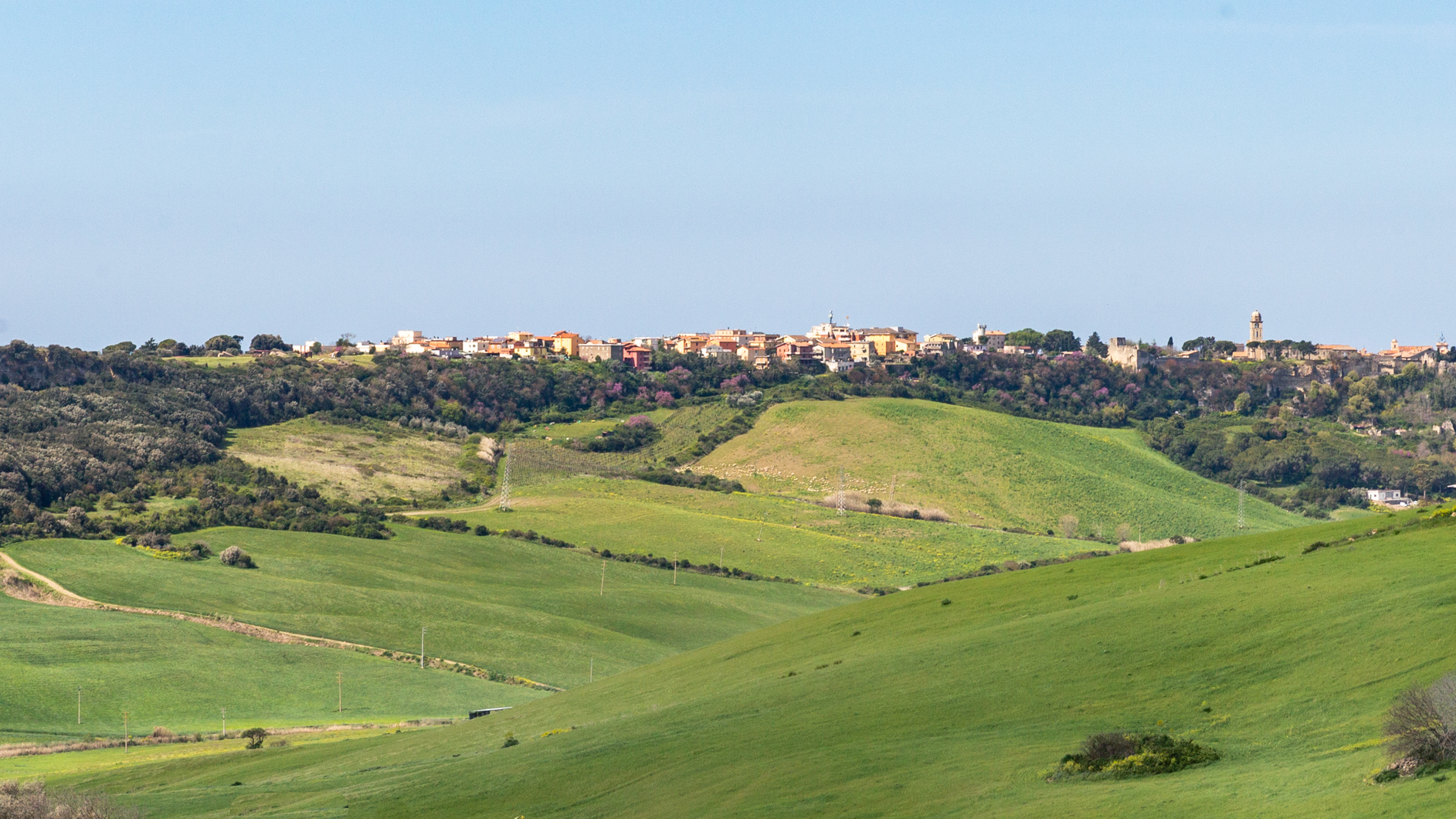
This stage of the Cammino degli Etruschi connects Monte Romano to Tarquinia, passing through a rural landscape that gradually opens up to tuff hills and archaeological areas that tell the story of ancient Tarchna, the Etruscan Tarquinia.
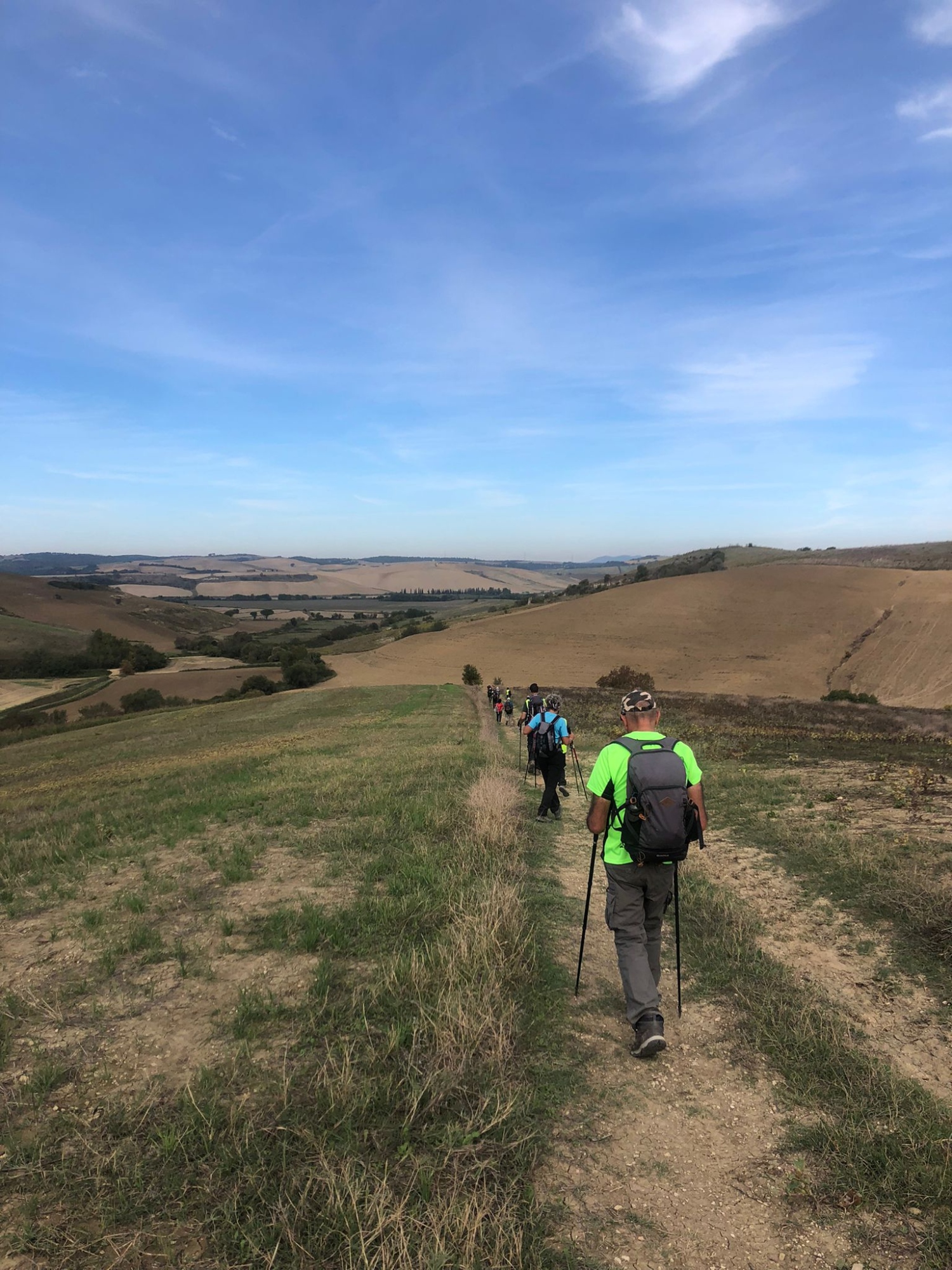
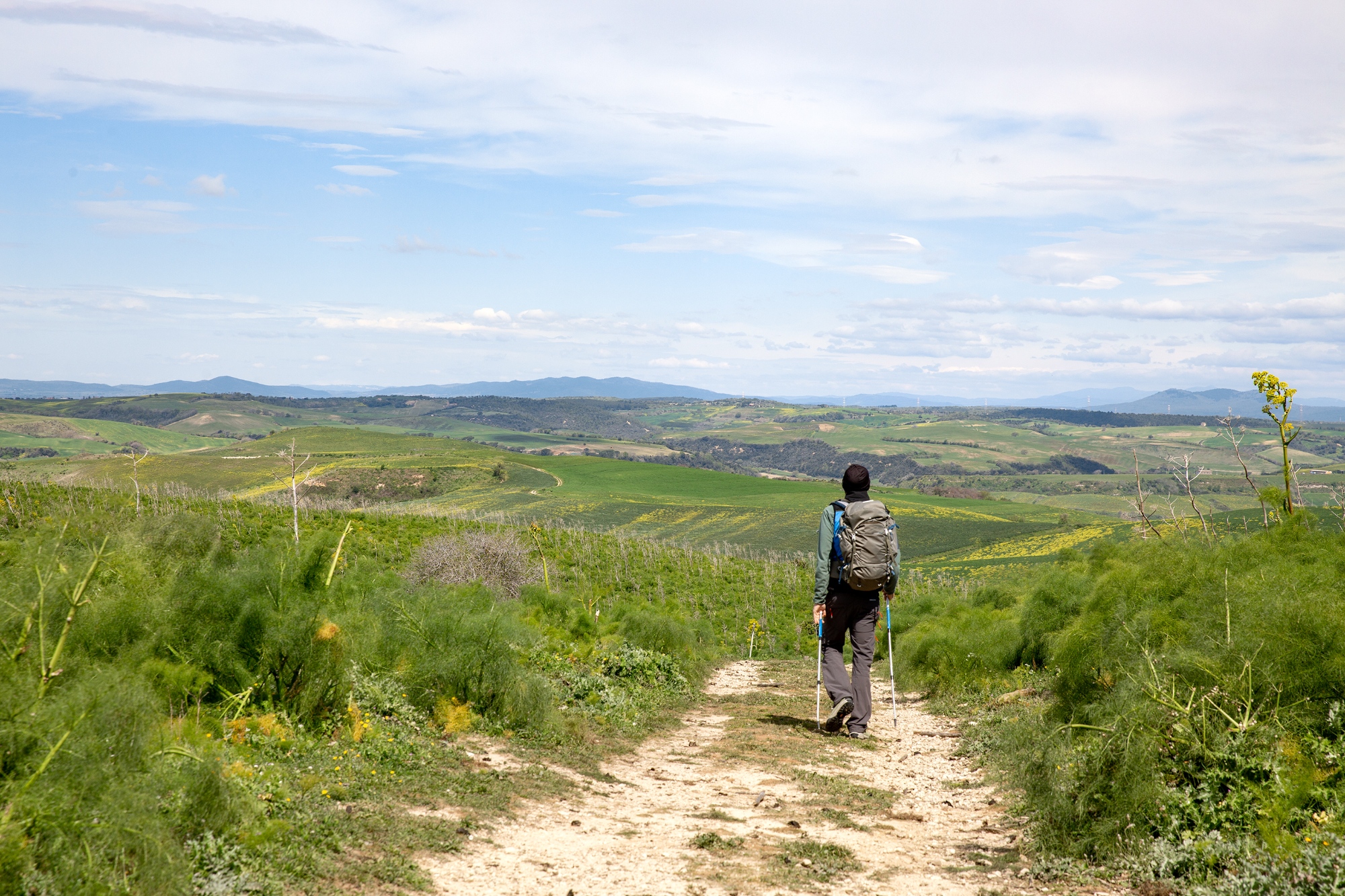
The trail begins in the centre of Monte Romano, a historic village that developed along the traditional routes between the inland areas and the coast. After an initial stretch of asphalt (about 2 km), the route enters an open agricultural landscape, with cultivated fields and gently sloping volcanic terrain that ensures good walkability. From the first hills, hikers can enjoy broad views over the Marta Valley, a river that shaped this fertile and strategic land since Etruscan times.
Following the Cammino di Tuscia 103, the trail winds through vineyards, pastures, and Mediterranean scrub, with minimal elevation change and a smooth, enjoyable pace. As you move forward, the landscape of Tuscia opens up with its typical alternation of tuff plateaus and wide valleys, offering views stretching as far as the higher ridgelines of the Viterbo area.
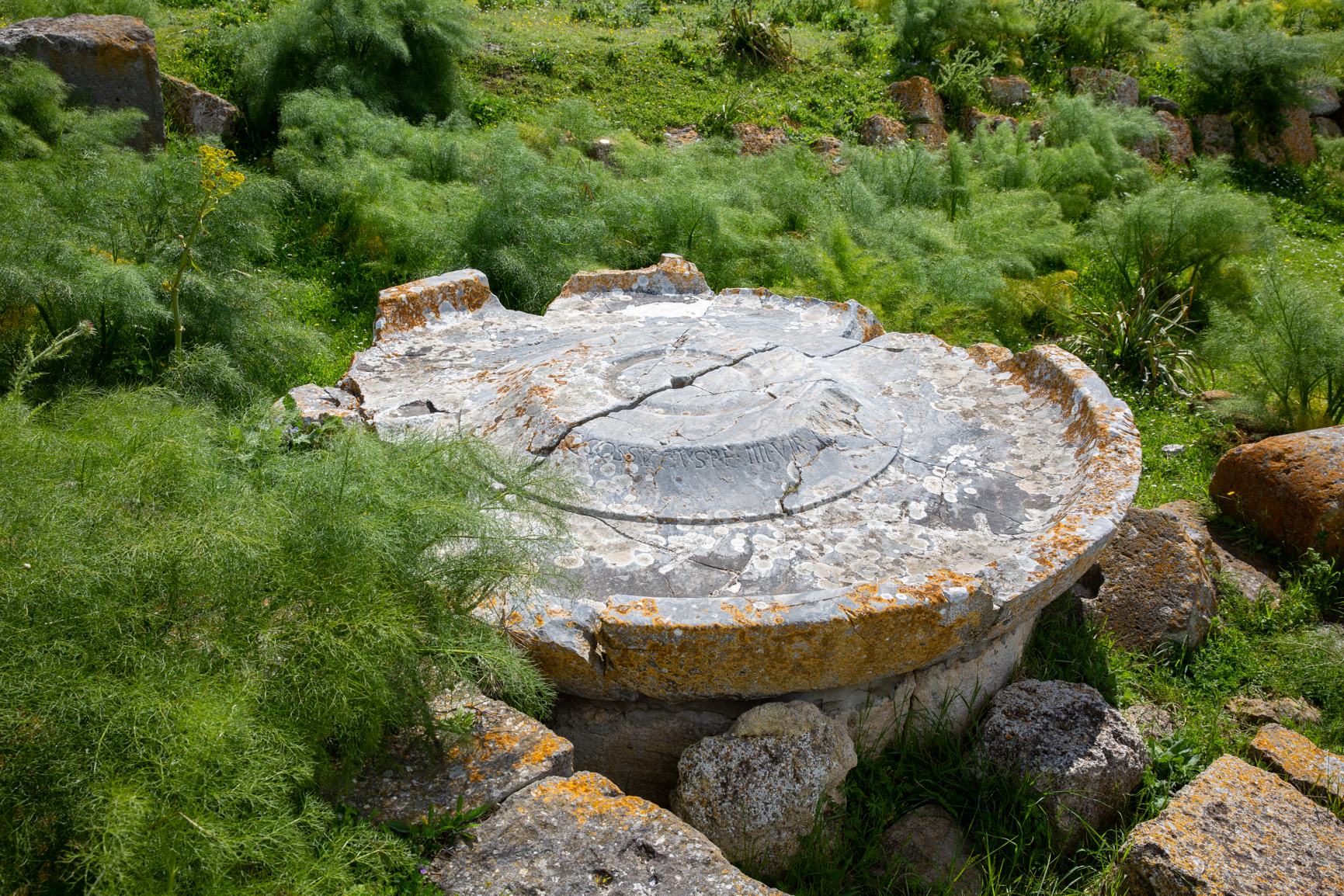
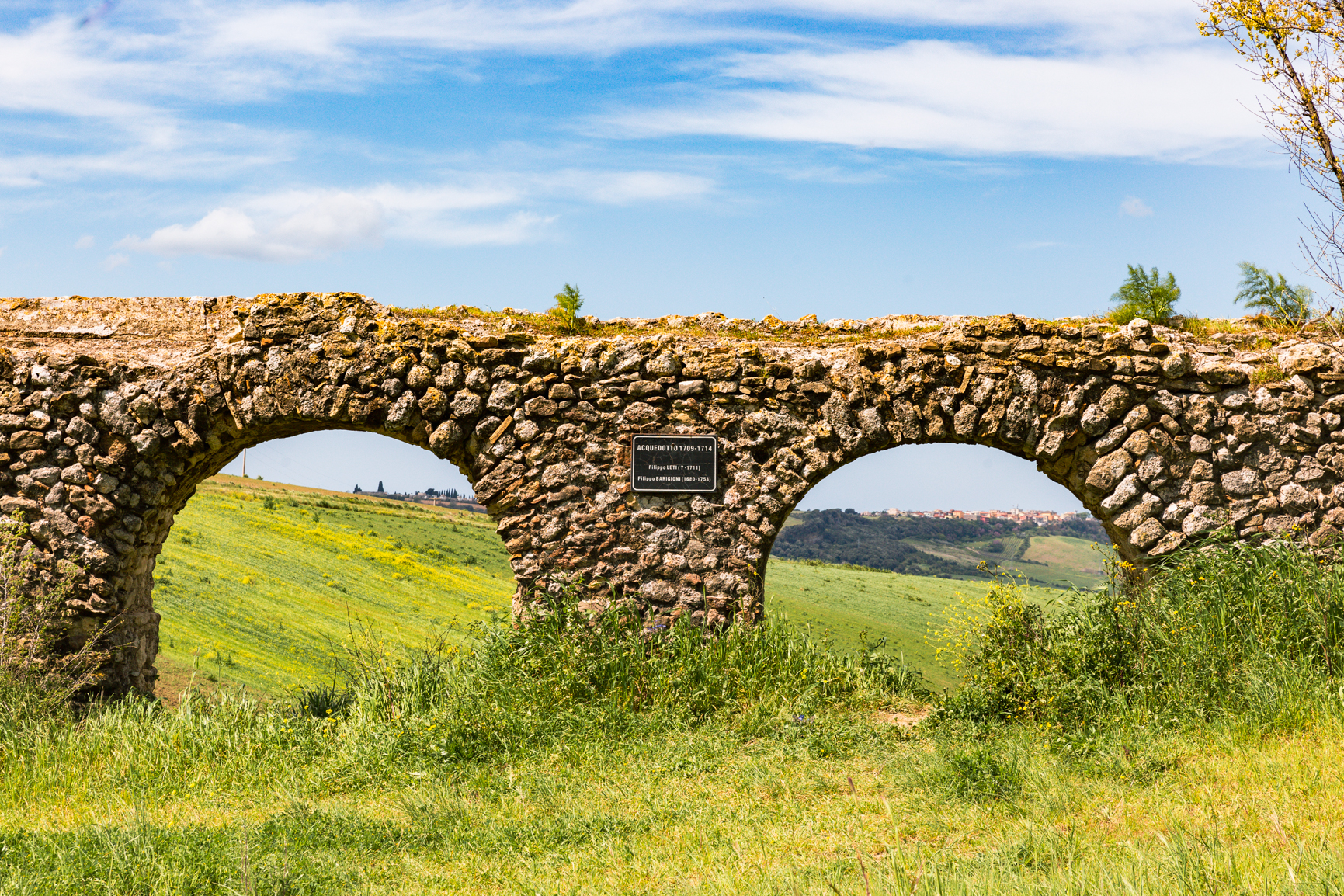
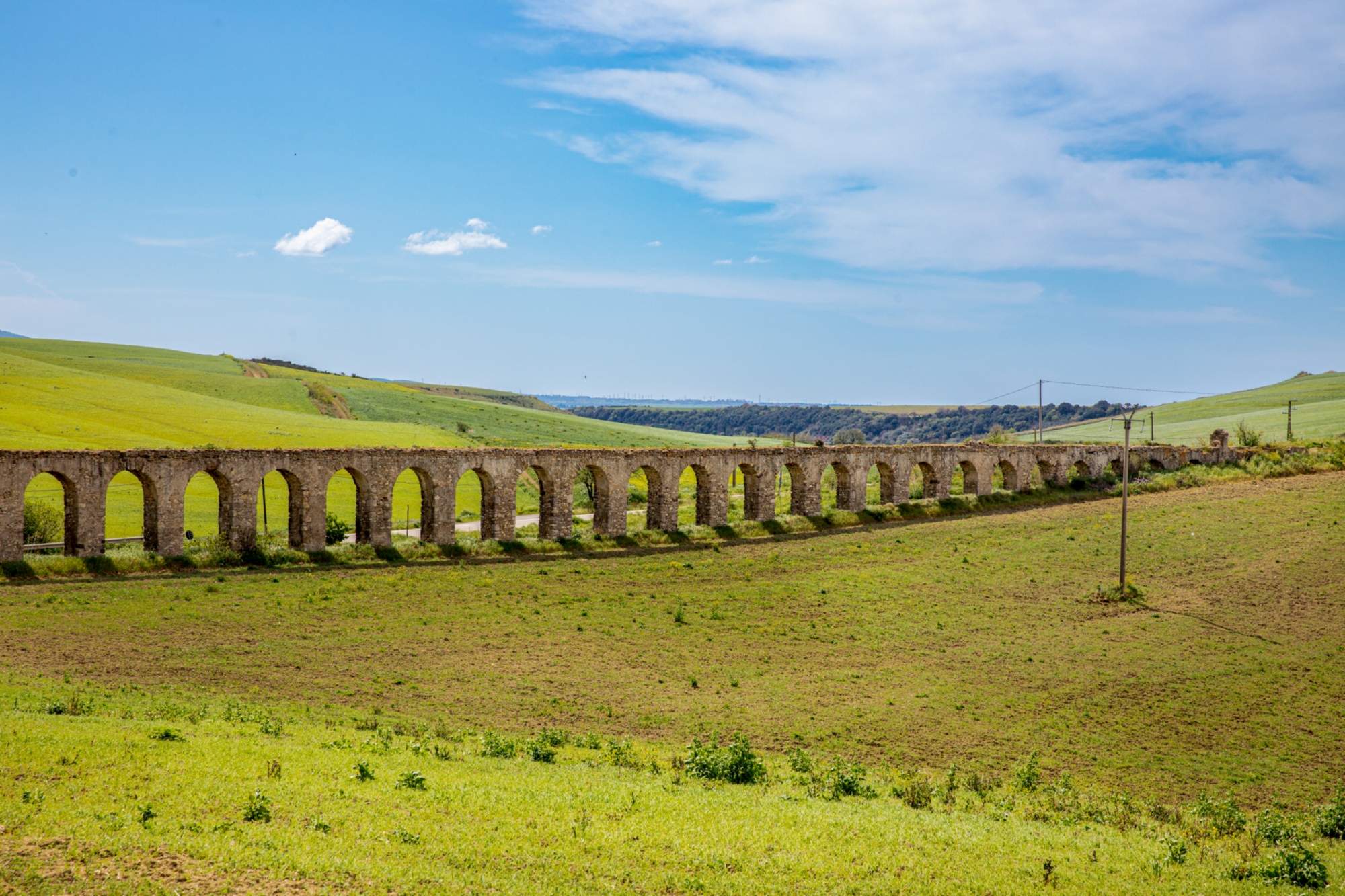
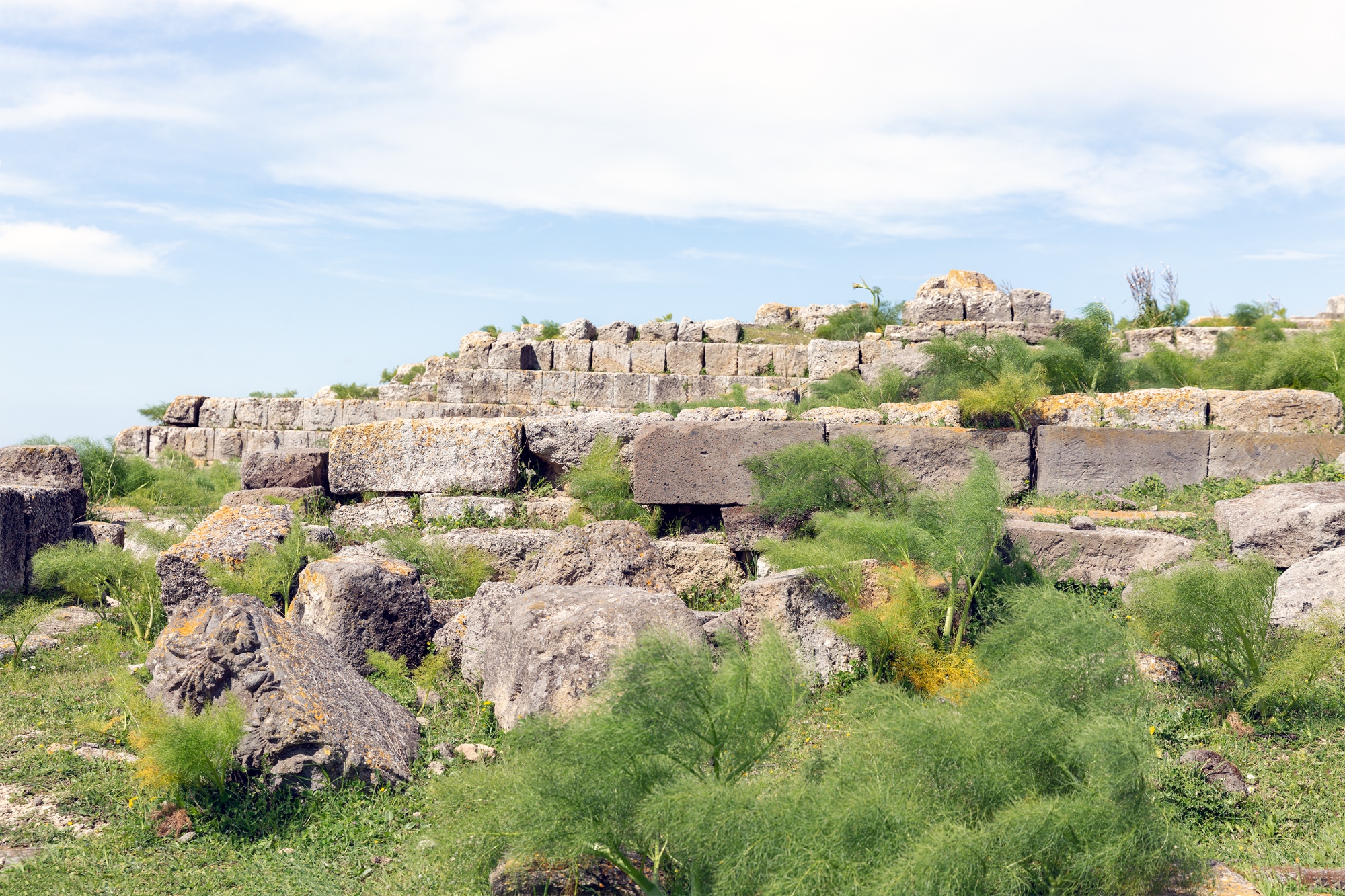
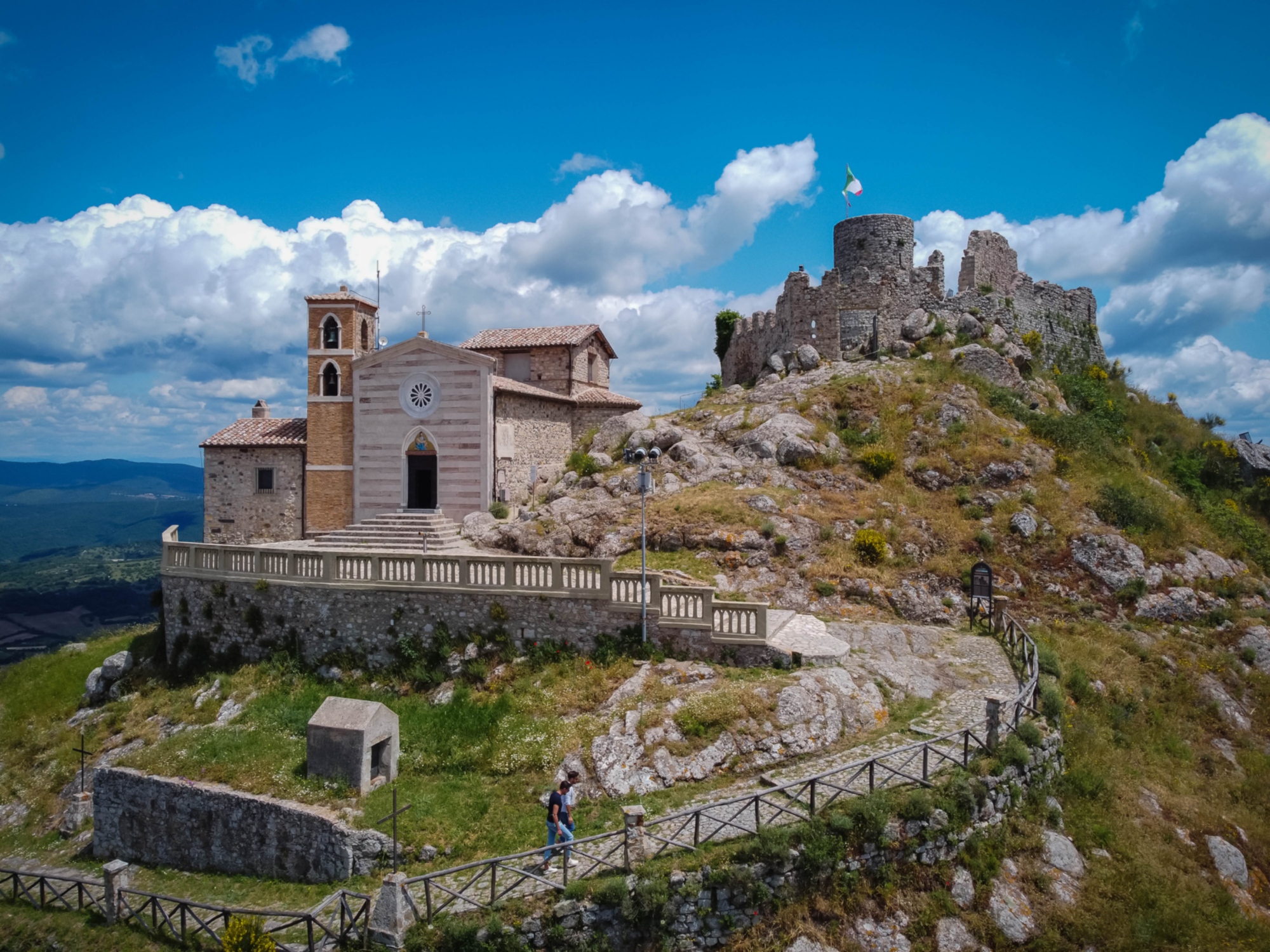
Just a few kilometres before reaching Tarquinia, you’ll arrive at the Ara della Regina area, one of the most important Etruscan archaeological sites. Here lie the remains of a massive Etruscan temple that once overlooked the ancient city and still offers an extraordinary viewpoint over the Marta Valley. In the distance, you can spot the Arcatelle aqueduct, a reminder of the historical significance of water supply systems in this region.
Descending slightly, your gaze opens to the Monterozzi necropolis, the famous Etruscan city of the dead, now a UNESCO World Heritage Site. While not directly on the trail, the view over its frescoed hypogeal tombs highlights the deep connection between landscape and Etruscan culture.
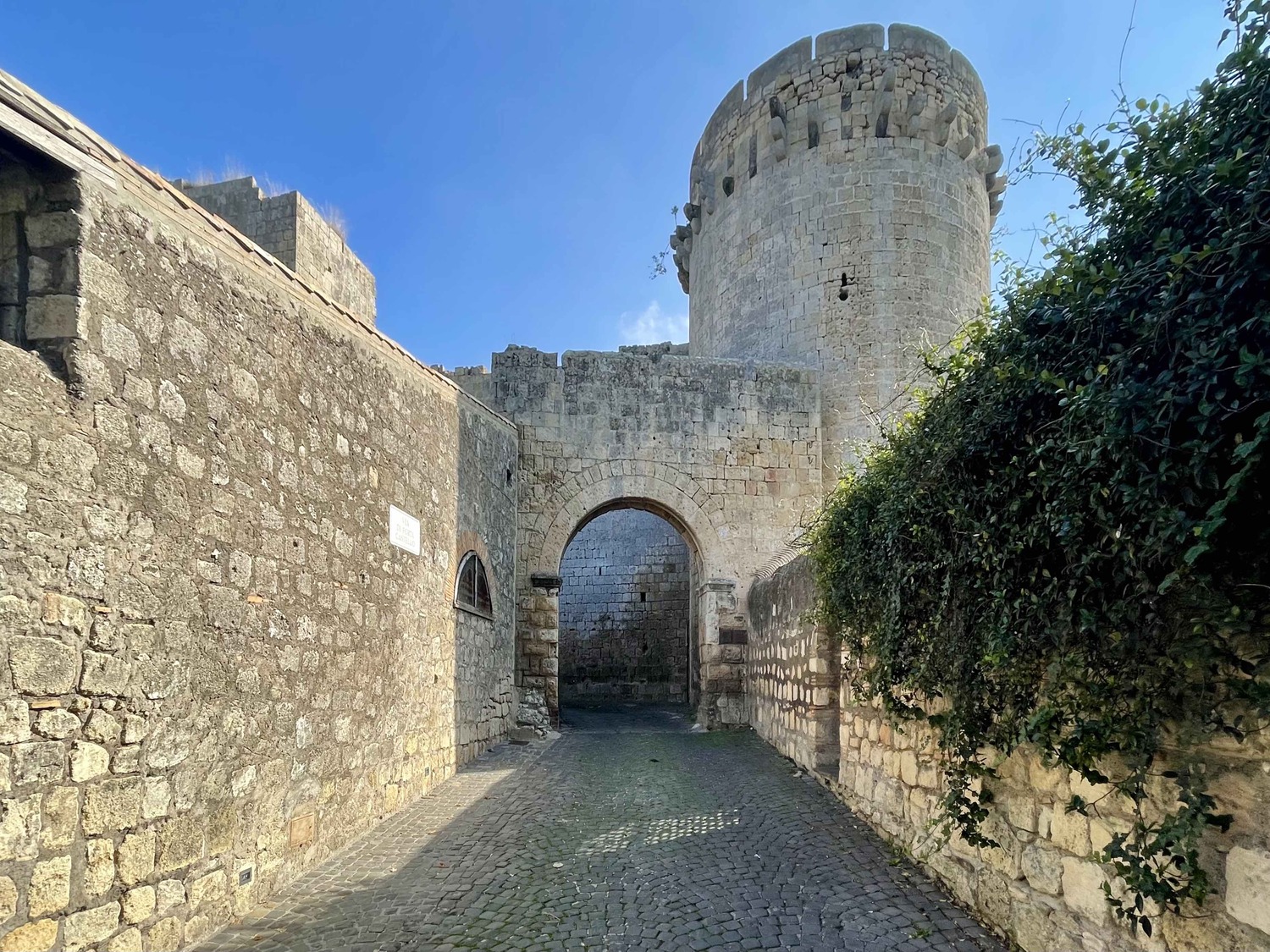
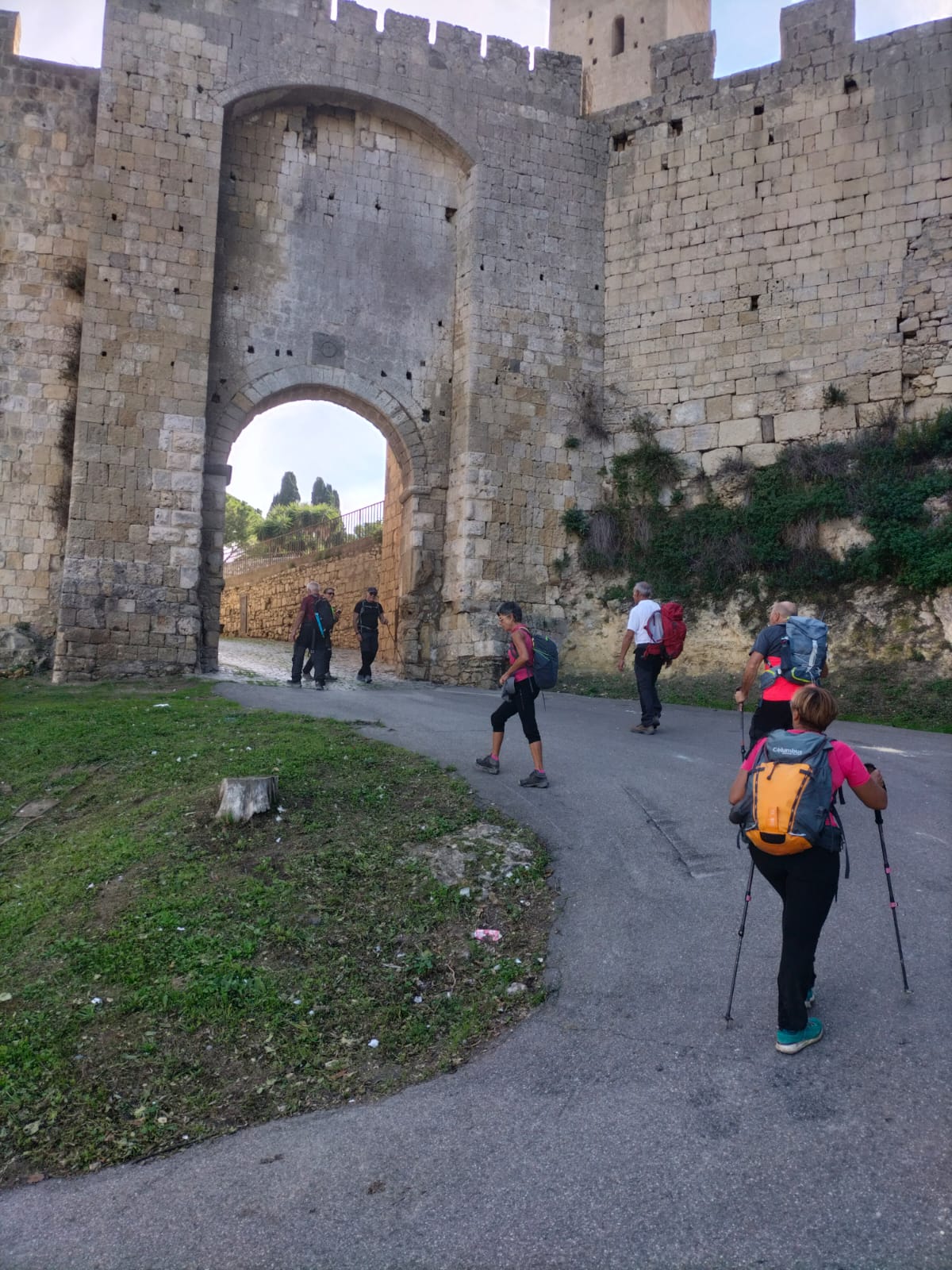
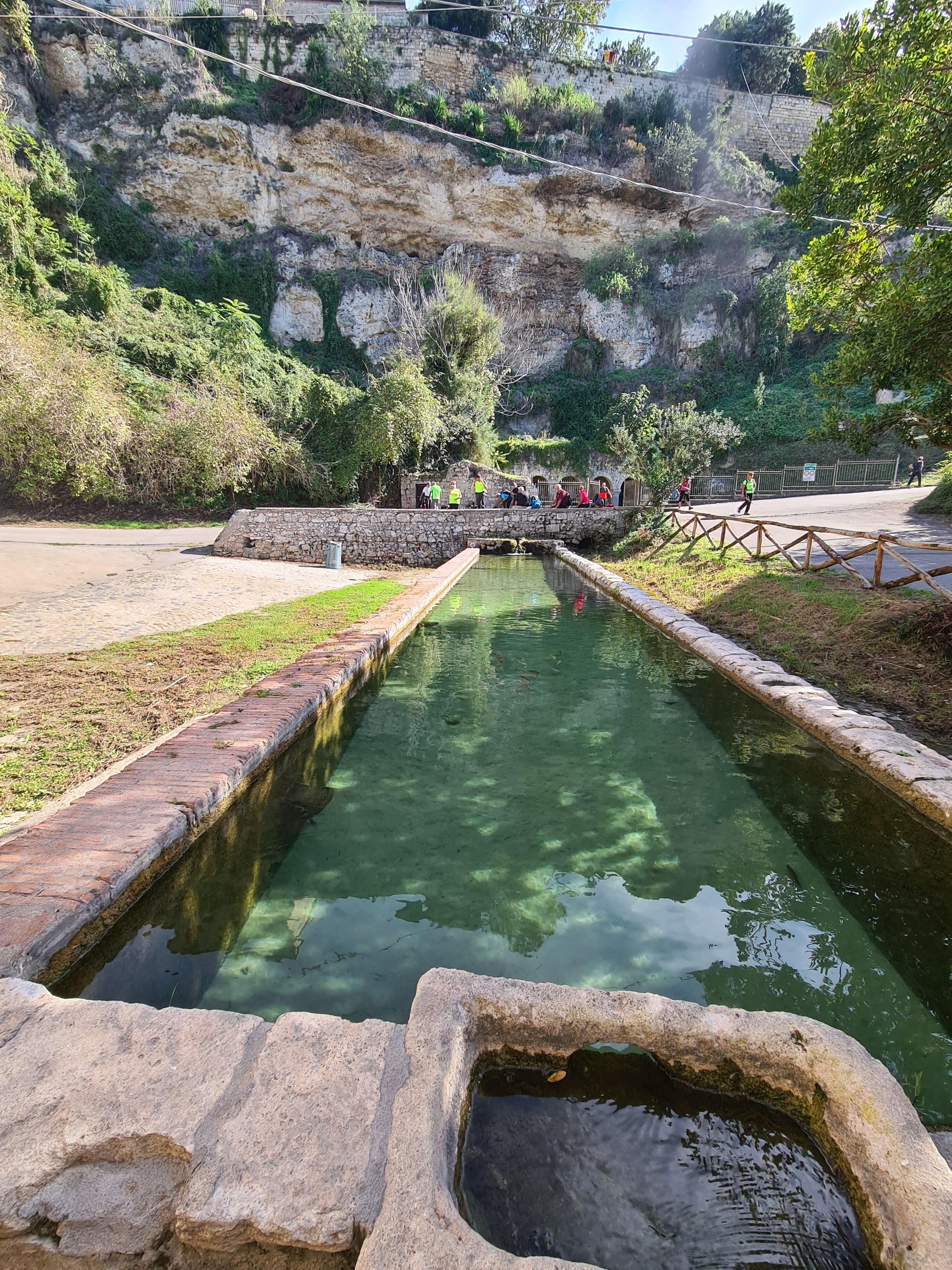
The final section of the route, along a well-trodden dirt road, leads to the western entrance of Tarquinia, passing by the historic Fontana Nova, a medieval hydraulic structure. A little further ahead, the Church of Santa Maria in Castello, with its austere Romanesque architecture, marks the arrival into the historic centre, known for its towers, tuff palaces, and a well-preserved medieval urban layout.
The walk ends in the heart of Tarquinia, where the National Archaeological Museum, housed in the Renaissance Palazzo Vitelleschi, offers a deeper understanding of the ancient city’s history through artefacts from the Monterozzi necropolis and other Etruscan sites.
A low to moderate difficulty route that combines hiking with the discovery of an exceptionally rich cultural heritage, offering an authentic glimpse into Etruscan Tuscia.
Informazioni aggiuntive
-
Signage: present – follow Cammino Tuscia 103
-
At the Ara della Regina, take time to observe the view: the panorama over the Marta Valley reflects the deep bond between nature and Etruscan civilisation.