A route through rural landscapes, tuff gorges, and Etruscan remains, from the medieval village of Montalto di Castro to the heart of ancient Vulci, where history and nature merge.
This stage of the Cammino degli Etruschi leads hikers through a landscape that spans the Lazio Maremma and the Etruscan hinterland, connecting the coastal plains to the historical grandeur of Vulci, one of the most powerful city-states of antiquity.
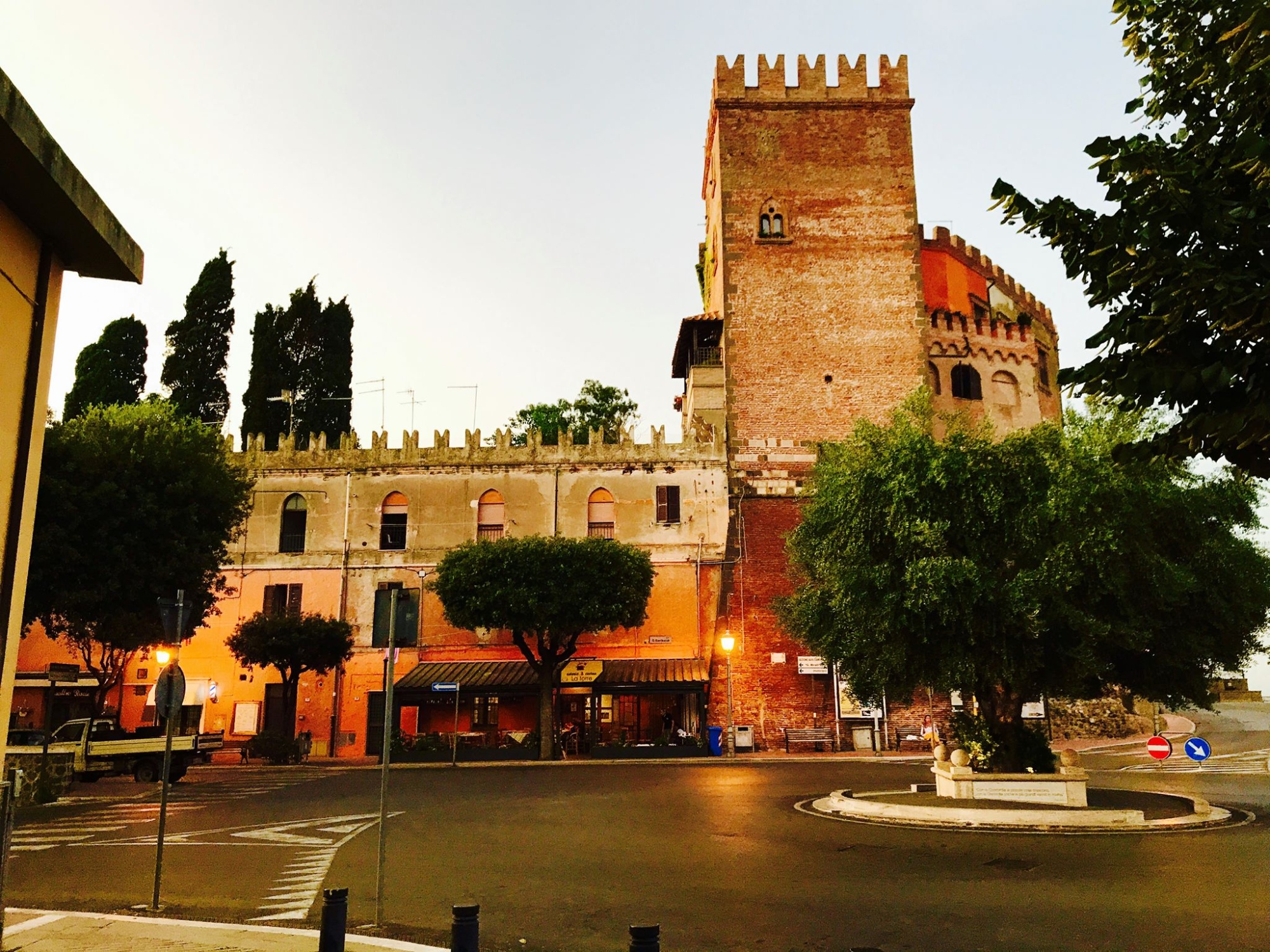
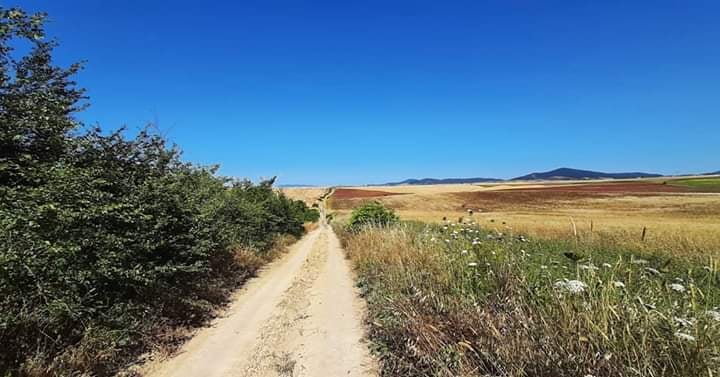
The walk begins in the historic centre of Montalto di Castro, a medieval village bearing traces of Etruscan, Roman, and Renaissance dominations. The Guglielmi Castle, with its imposing walls, symbolises the village’s defensive role, once a strategic point between the inland territories and the Tyrrhenian Sea. Leaving the town behind, the trail opens onto a wide, flat agricultural landscape, where fields of grain and sunflowers alternate with patches of Mediterranean scrub.
The route follows dirt roads and rural tracks, crossing land shaped over centuries by rivers, particularly the Fiora River, which has made this region both fertile and rich in biodiversity. The horizon broadens, the sky takes centre stage, and the landscape becomes more essential, defined by tree lines and distant emerging hills.
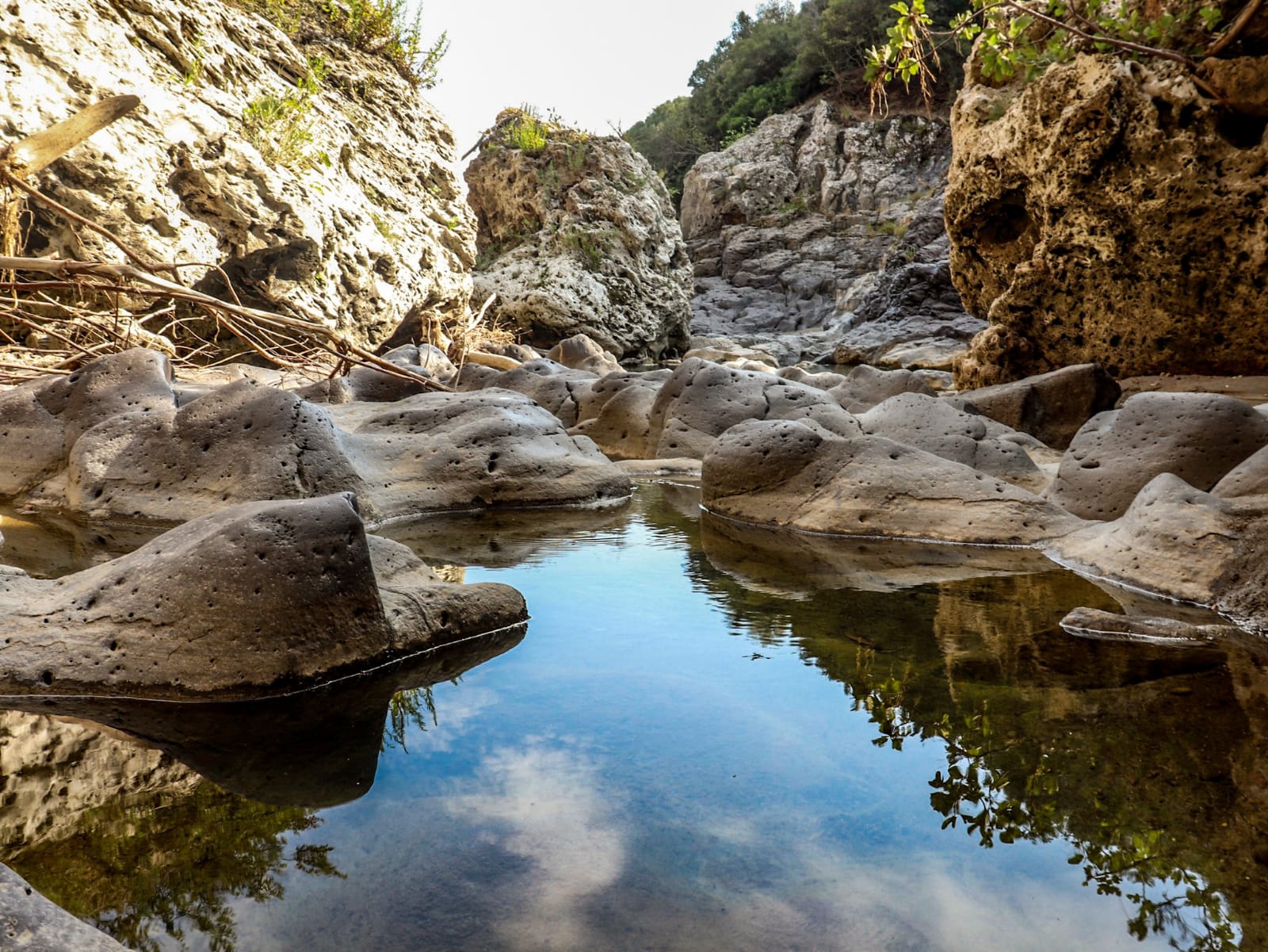
Continuing northeast, the path enters a transition zone between the plain and the volcanic plateau. The gentle undulations of the terrain signal the approach to the Fiora Valley, where the soil begins to change: tuff rock starts to emerge, creating a wilder landscape sculpted by millennia of erosion.
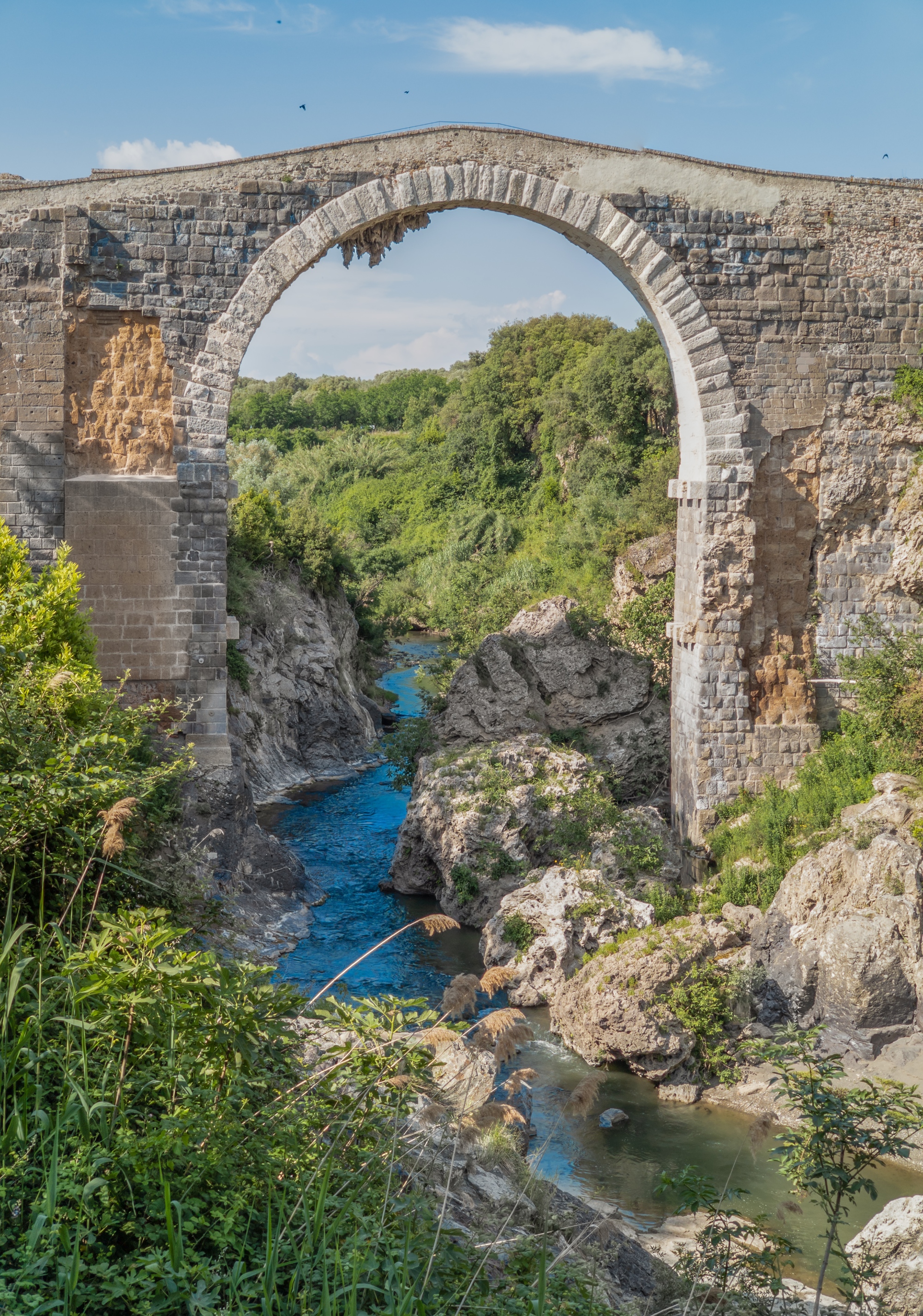
Arrival in Vulci is heralded by the crossing of the Ponte del Diavolo, a medieval tuff bridge spanning the Fiora gorges, offering a spectacular viewpoint over the surrounding landscape. Beyond the bridge, the vista opens once more onto the Vulci plateau, one of the most important archaeological areas in Etruria.
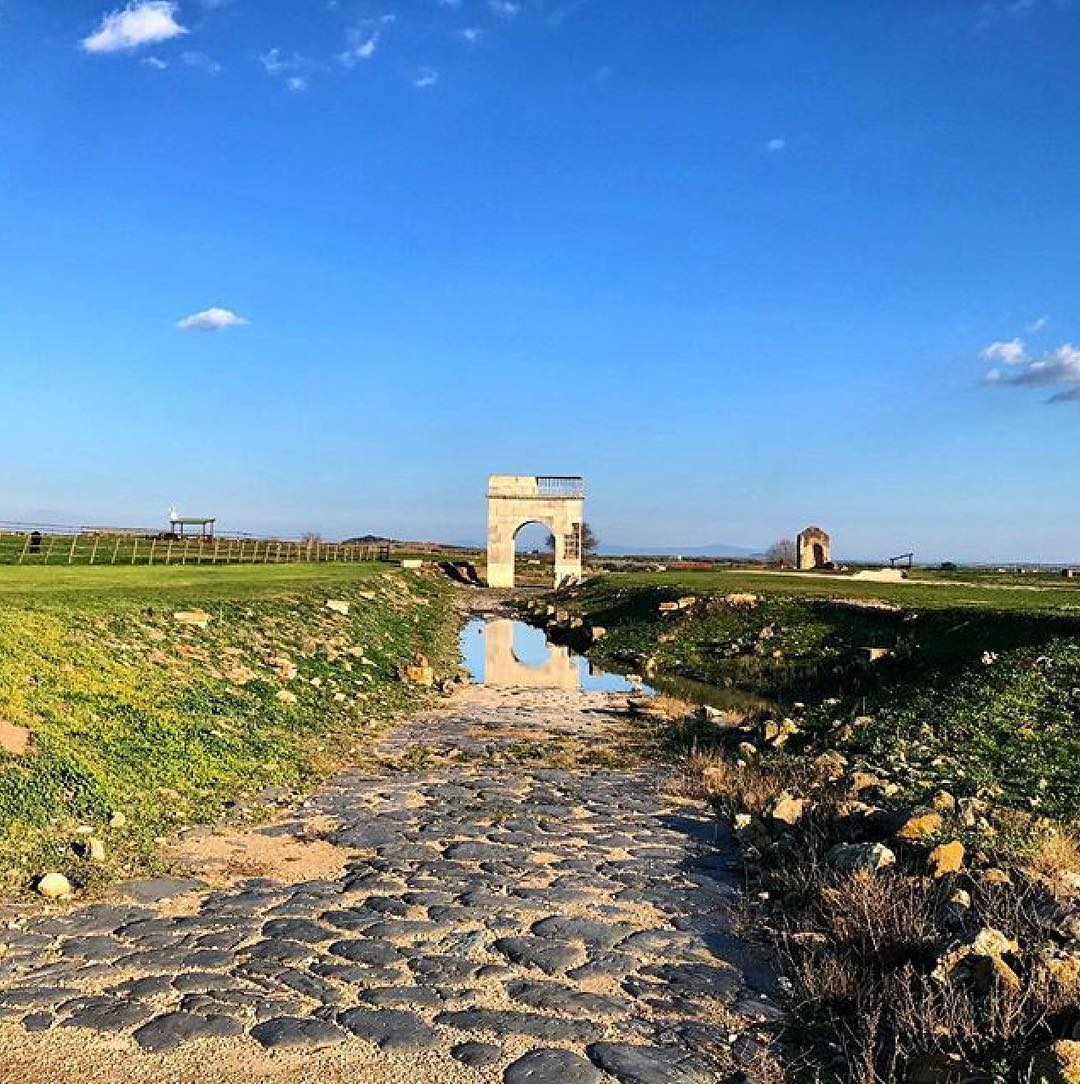
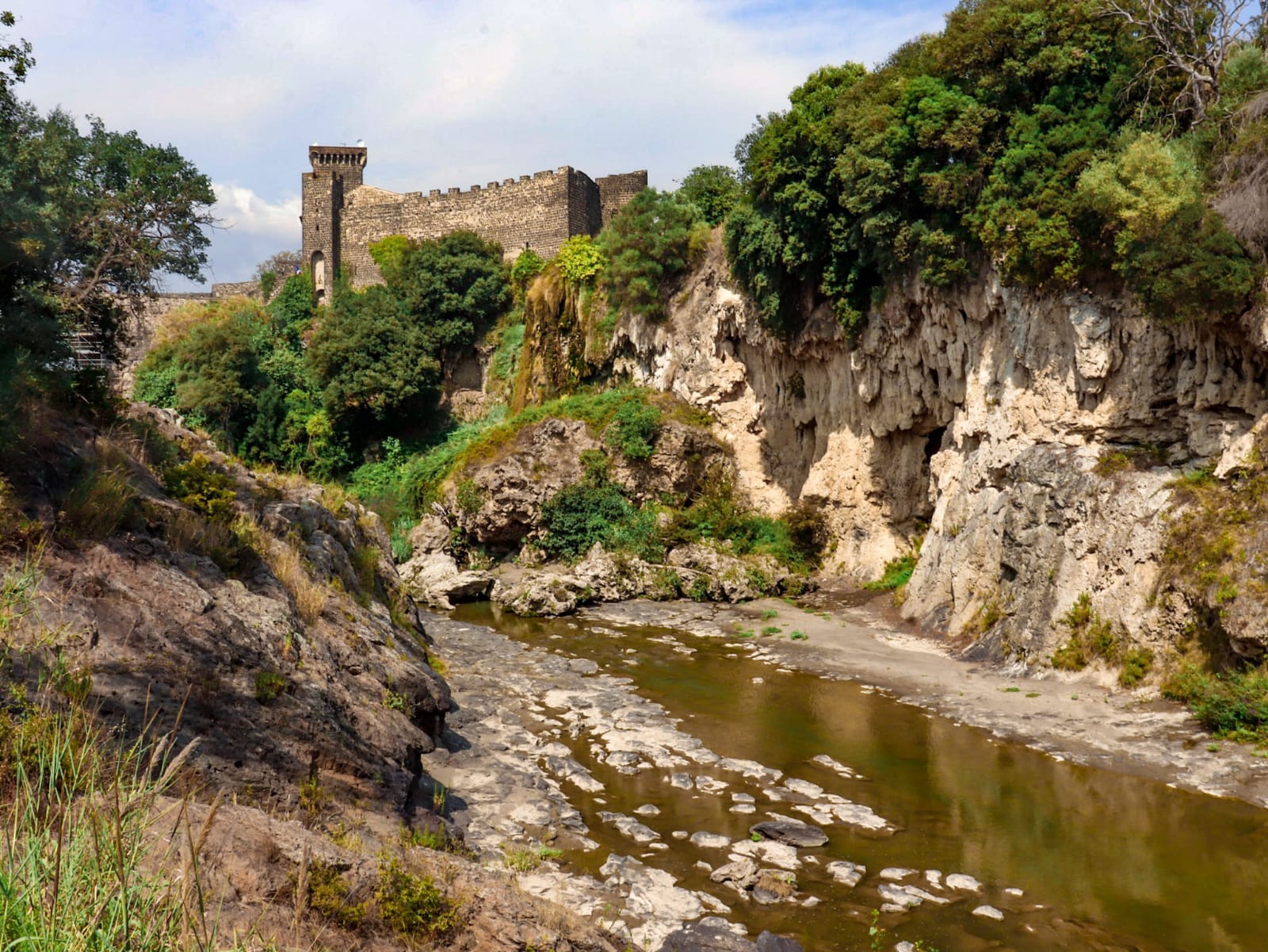
The Vulci site, set in a striking natural setting, preserves the remains of a city that for centuries was a crossroads of trade and culture. The ancient walls, temples, and necropolises speak to the grandeur of the Etruscan civilisation, while the Castello dell’Abbadia, now home to the National Archaeological Museum, houses extraordinary artefacts from the Vulcian tombs.
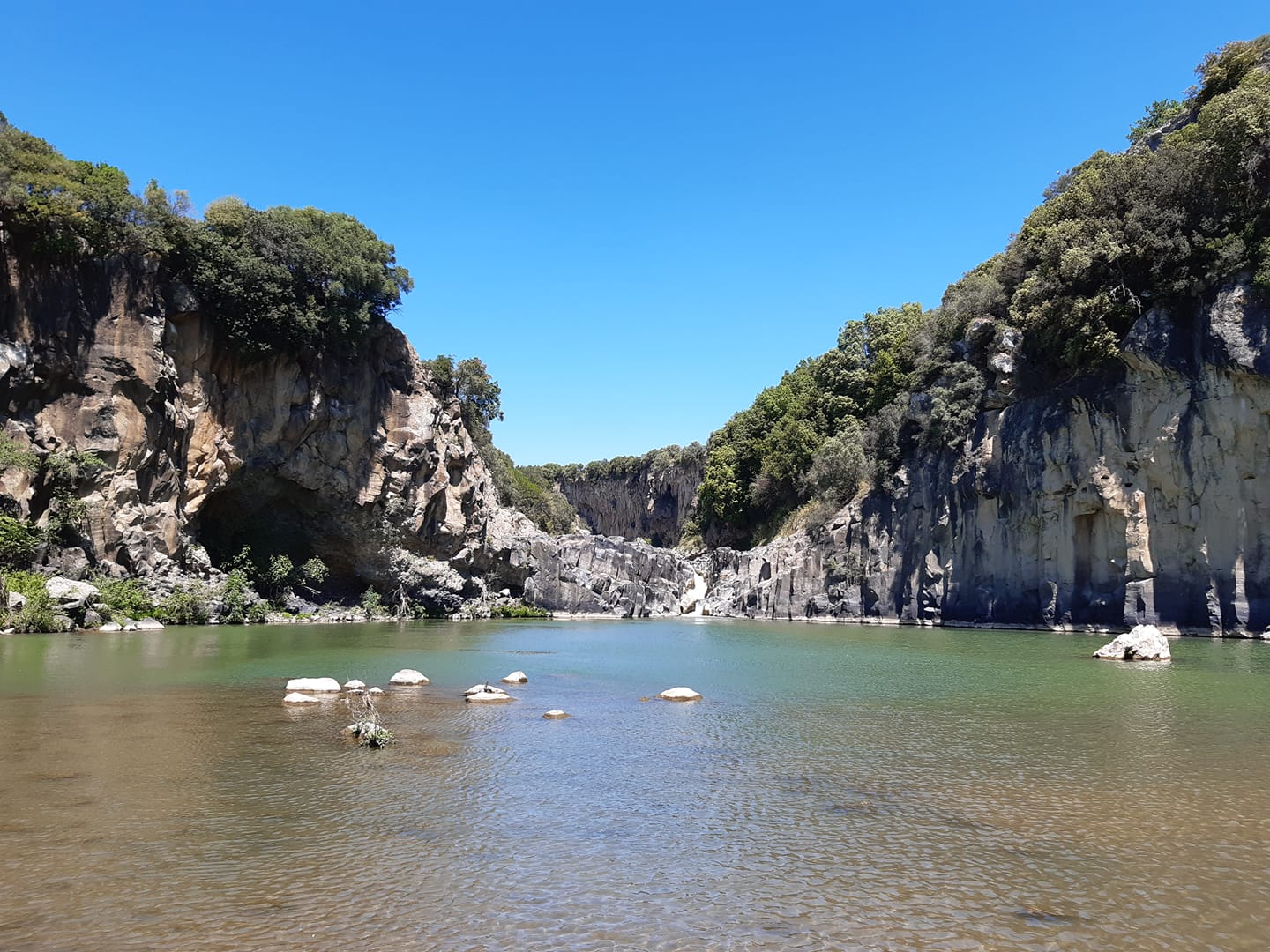
Not far away lies the Lago del Pellicone, nestled between lava flows, offering one last evocative stop before ending the stage.
A low to moderate difficulty route, with long sun-exposed sections requiring appropriate gear. The reward is a journey through untouched landscapes and eternal ruins, where history and nature blend in perfect harmony.
Info
As you cross the Ponte del Diavolo, pause for a moment and observe the Fiora Valley: here, time seems suspended, and history carved in stone accompanies your steps.