From the Monterano Nature Reserve to the historic town of Tolfa, through waterfalls, river crossings on the Mignone, ancient thermal baths, and the panoramic views of the Tolfa Mountains. Wild nature and historic villages.
This second stage of the Cammino degli Etruschi leads from Canale Monterano to Tolfa, crossing the Monterano Nature Reserve, the Mignone River and the Stigliano thermal baths, before climbing into the Tolfa hills.
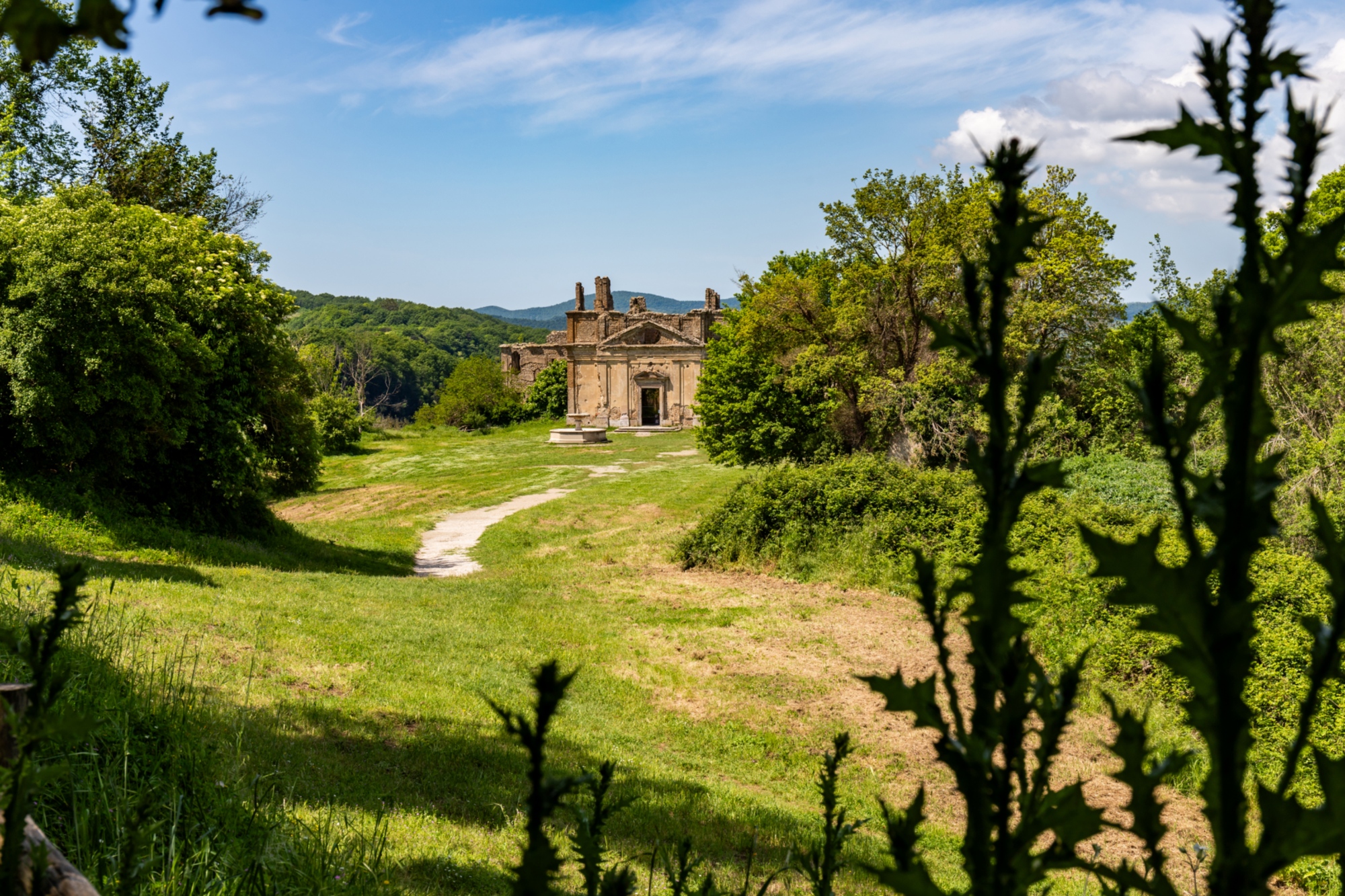
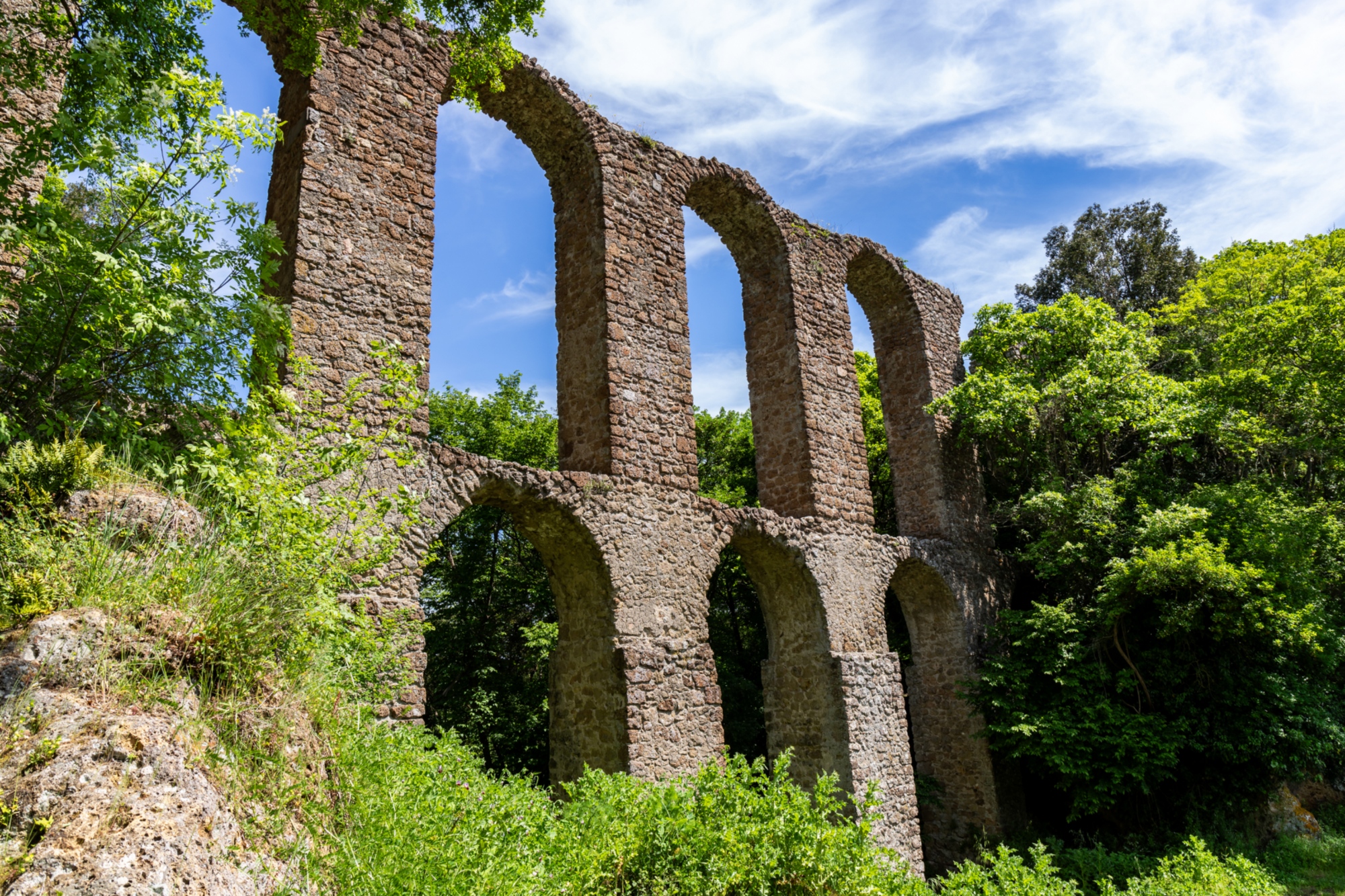
he hike begins in the heart of Canale Monterano, with a short descent into the forest, skirting the scenic Cascata della Diosilla, set between tuff cliffs and centuries-old mosses. As you cross the reserve, you’ll reach the evocative ruins of Ancient Monterano, featuring the remains of Palazzo Altieri and the Church of San Bonaventura, designed by Bernini.
Continuing towards the Mignone River, the first challenging point arises at km 5.1, where a ford may become difficult to cross during periods of high water. From there, the trail winds through meadows and woods to reach the Mercareccia ponds, a valuable wetland area, perfect for birdwatching.
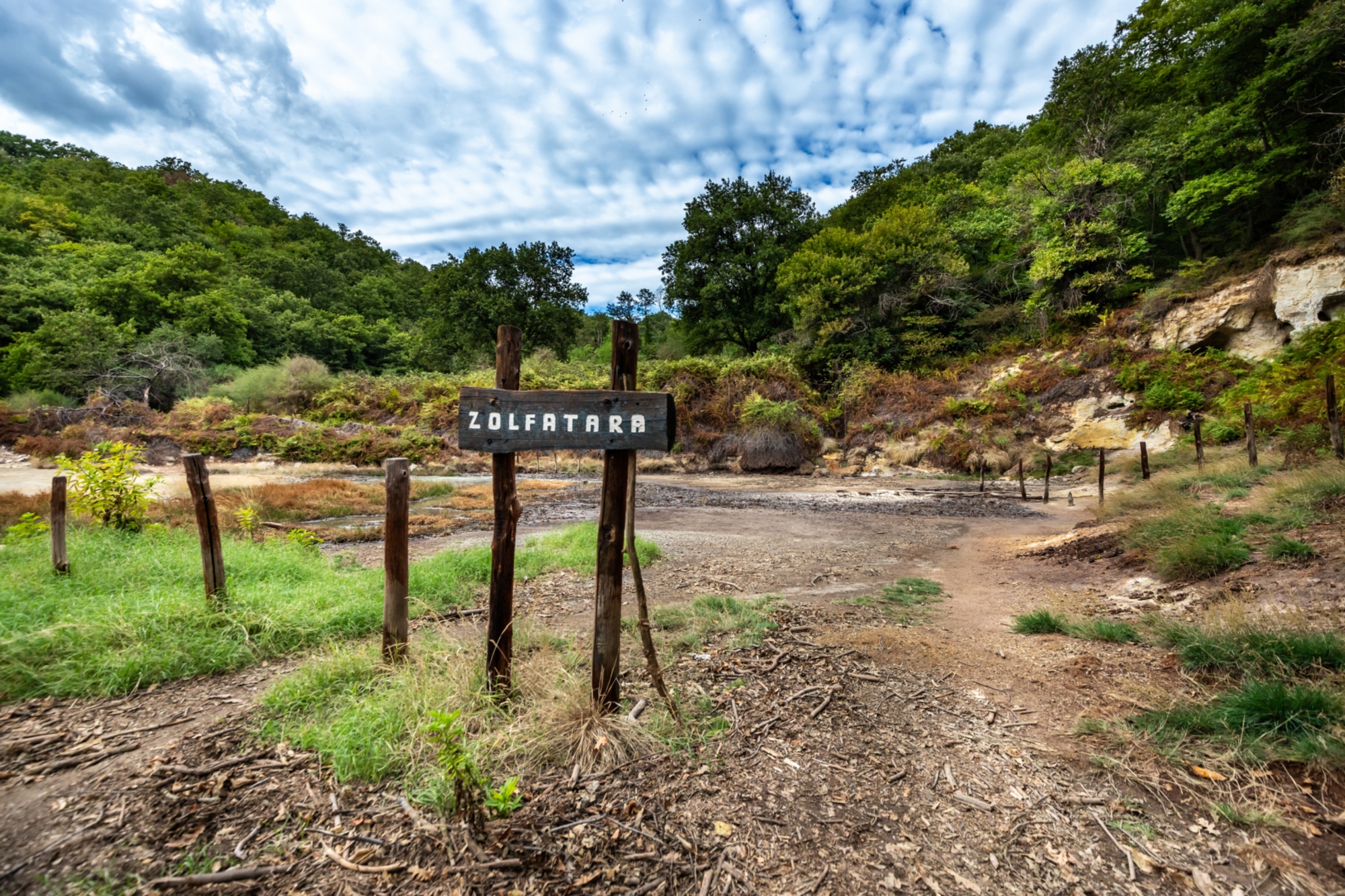
The route then skirts the Stigliano thermal baths, renowned since Roman times for their sulphurous waters. Beyond the thermal area, the path climbs gently through pastures and oak woods, arriving at the Necropoli del Ferrone, a group of Etruscan rock-cut tombs carved into the tuff, set in a still unspoiled landscape.
After the necropolis, the trail merges with ancient pastoral routes that for centuries linked the lowlands to the Tolfa uplands. Open stretches alternate with shaded areas beneath holm oaks and Turkey oaks, offering a pleasant break on warmer days.
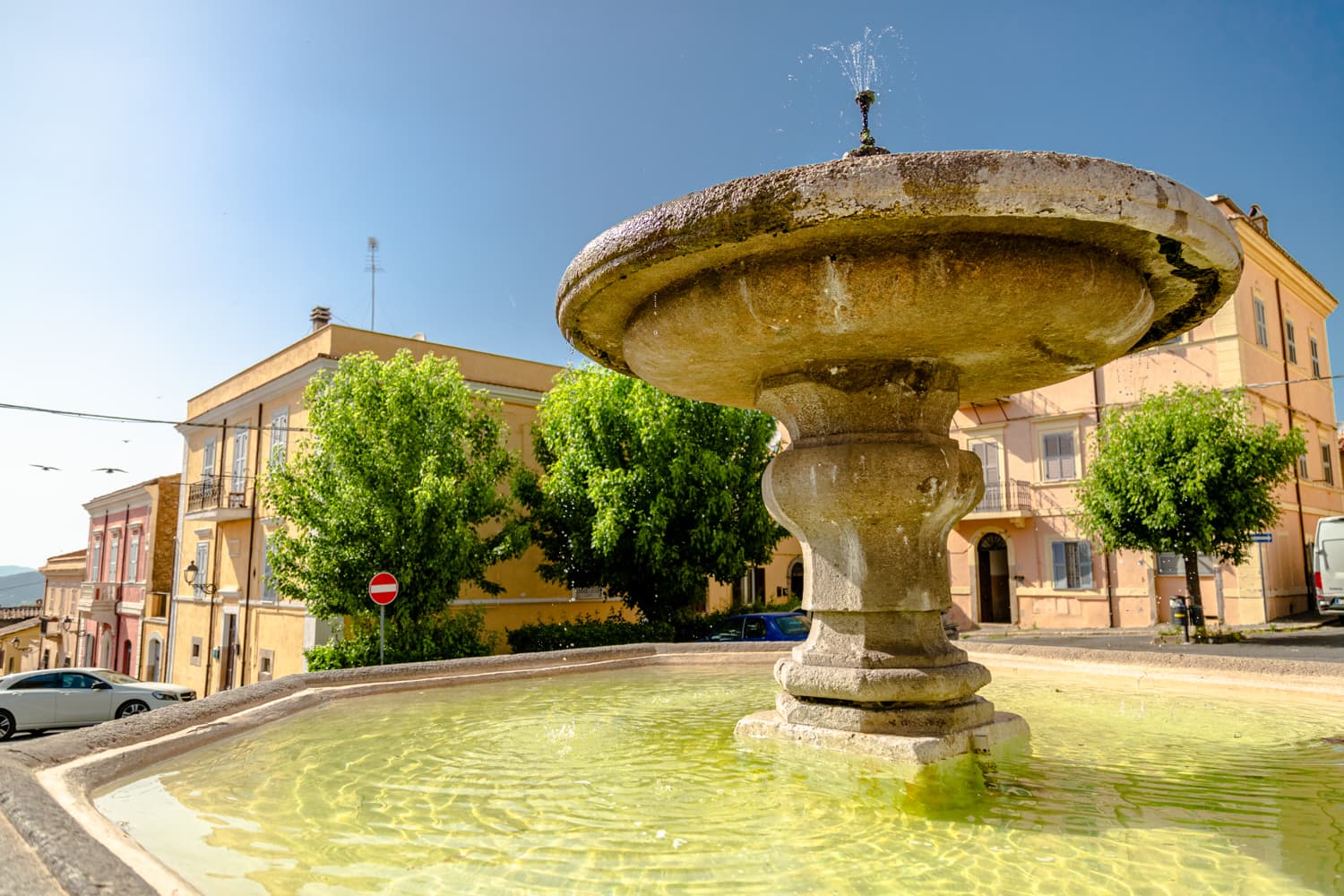
The final stretch, a steady climb, offers spectacular views over the Tolfa Mountains. The hike culminates in Tolfa, a hilltop village perched on a tuff spur and dominated by the Frangipane Fortress, a stunning panoramic lookout.
A moderately challenging itinerary, alternating wooded paths, river gorges and open landscapes, perfect for those seeking an experience rich in nature and history.
Info
- Signage
Not present
- Due to the nature of the terrain, it is strongly recommended to equip yourself with:
– Appropriate footwear: waterproof, ankle-high trekking boots, preferably Gore-Tex, to ensure stability and protection from moisture.
– Hiking poles: useful for maintaining balance on slippery terrain and when crossing watercourses.
- Safety recommendations
Challenges
The stage crosses a geologically complex area, characterised by clayey soils and volcanic deposits typical of the Tolfa Mountains and the Tolfetano-Sabatino region. The presence of trachytic rocks and clay sediments, the result of ancient volcanic activity, makes the terrain especially sensitive to rainfall. In wet conditions, the soil tends to retain water, creating muddy and slippery sections. Waterproof Gore-Tex boots with good ankle support are therefore recommended for safety and comfort.
– Km 5.1 – Ford across the Mignone River
The ford is passable almost all year, including winter. However, after heavy rainfall, the water level may rise and make the crossing more challenging. Extra caution is advised in such conditions. You’ll likely need to remove your boots, and to reduce the risk of slipping, hiking poles are recommended for balance on uneven, slippery riverbeds.
After crossing, it’s advisable to have a towel or absorbent cloths handy to dry your feet thoroughly before putting your boots back on. Avoid walking with wet feet to prevent blisters and irritation, ensuring greater comfort for the rest of the hike.
– Km 9 and Km 12 – Wooden gates
Along the route there are two wooden gates that can be climbed over using the gaps between the planks. At these points, removing your backpack may help. Other gates along the route can be opened and must be closed after passing, to prevent animals from escaping.
The area is frequented by free-roaming horses and Maremma cattle, including the Tolfetano breed, traditionally used for transhumance and grazing. It is recommended to behave calmly and respectfully around animals, avoiding close contact or disturbances.
Approaching the trail with proper preparation and awareness of local geological conditions will contribute to a safe and enjoyable hiking experience.